

- What Is Responsible Gambling?
- Responsible Gambling at BC Game
- How to Stay in Control
- Responsible Gambling Tools
- BC Game Responsible Gambling Tools
- Signs of Problem Gambling
- Self-Exclusion from BC Game
- Protection of Minors
- Getting Help for Gambling Problems
- Where to Get Gambling Support
- How to Contact BC Game for Help
- FAQ
What Is Responsible Gambling?
Responsible gambling begins with understanding that all gambling with money is prone to causing a loss. There is nothing in terms of system, bonus, betting system, or winning streak recently experienced that will make gambling profitable.
The player is in control when gambling does not exceed his/her budget and does not affect work or private matters and when losing does not cause bigger bets to recover money lost.
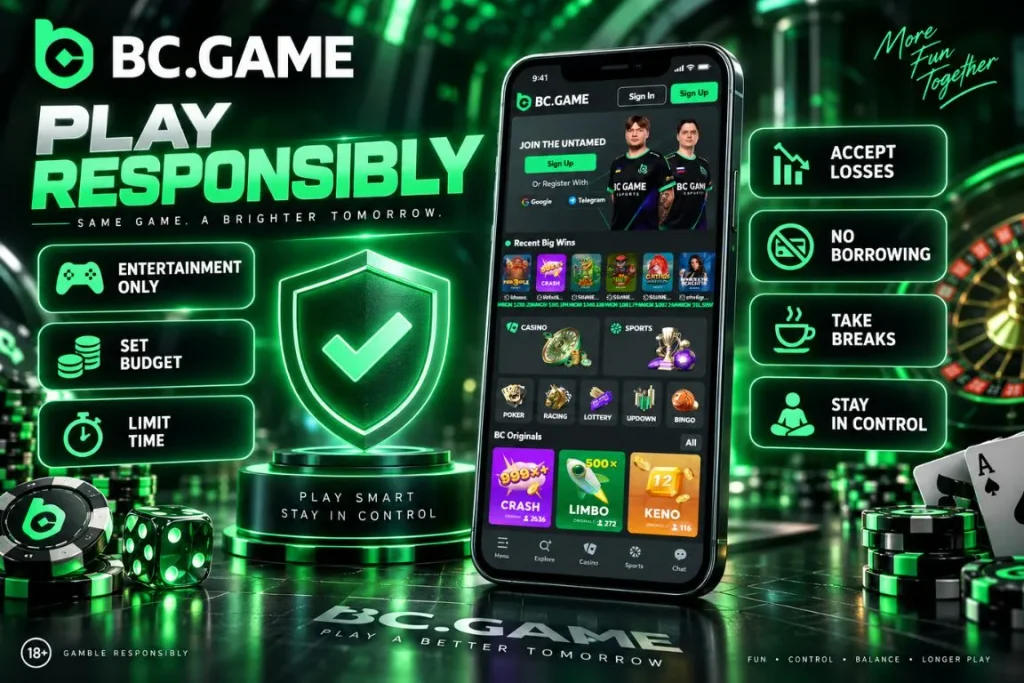
A practical responsible-gambling approach includes:
- Budget should come only from disposable income.
- Time should be limited before a session begins.
- Losses should be accepted rather than chased.
- Borrowed money should never fund gambling.
- Gambling should not replace regular income.
- Breaks should be taken when decisions become emotional.
The important test is simple: gambling should remain optional entertainment. Once it starts controlling financial decisions, mood, sleep, relationships, or daily responsibilities, a longer break is appropriate.
Responsible Gambling at BC Game
BC Game offers two specific account restrictions: 7 day cooling off and self-exclusion. Self-exclusion on the site restricts the account for a minimum of six months, along with prohibiting promotional material for the time period.
The website imposes an age restriction of 18 years and more, according to the age of gambling in the area where users play. Minors’ protection includes recommendations to protect devices, keep personal and payment details away from children, and avoid unattended access to an active account.
The use of the restrictions will be most efficient if applied as early as possible. The later these actions are taken after gambling addiction leads to negative consequences, the harder it is to regain control.

Last used 6 minutes ago
How to Stay in Control
Good habits work best when they are decided before money is deposited or a game starts.
Use these basic controls:
- Set a fixed gambling budget before each week or month.
- Choose a session length before opening a casino or sportsbook.
- Stop when the planned spending limit has been reached.
- Never increase stakes simply to recover earlier losses.
- Keep rent, food, bills, savings, and debt payments separate.
- Take regular breaks even when the session is going well.
A win should not automatically justify a larger stake, just as a loss should not trigger another deposit. Both situations can encourage decisions that were not part of the original budget.
Keeping a simple record of deposits and withdrawals can also make spending easier to judge. Account balance alone does not always show how much money has been used over a longer period.
Responsible Gambling Tools
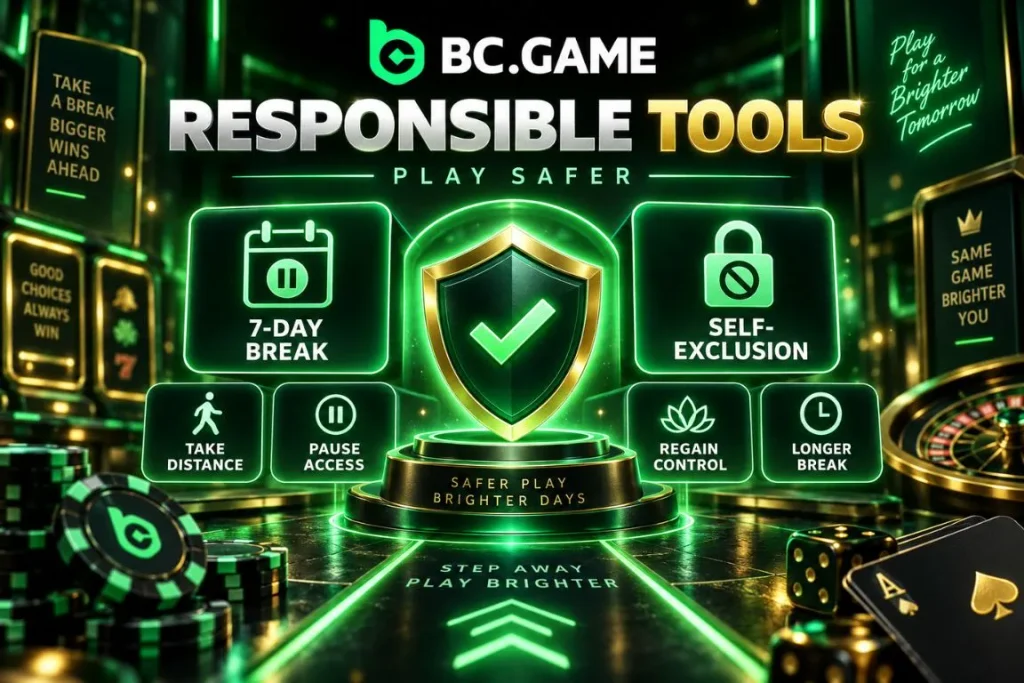
The current public responsible-gambling information confirms cooling-off and self-exclusion. Separate deposit limits, loss limits, session limits, or stake limits should not be treated as established account functions unless they are actually available in the user’s account at the time.
The 7-day cooling-off option is intended for a shorter break. Self-exclusion is the stronger measure and prevents normal account use for a longer period.
Both tools serve the same basic purpose: separating the player from immediate access when continuing to gamble is no longer a good decision.
Users who feel they are losing control should choose the option that creates enough distance from gambling rather than selecting the shortest possible restriction simply to return quickly.
Limits and Account Controls
No separate public description currently confirms dedicated deposit, loss, session-time, or per-bet limits as standard BC Game account controls. These functions should therefore not be presented as available without checking the live account interface.
Confirmed responsible-gambling controls focus on restricting access instead:
- Cooling-off provides a temporary break from gambling.
- Self-exclusion creates a substantially longer restriction.
- Account access is restricted during self-exclusion.
- Promotional communication stops during the exclusion period.
- Support can assist with responsible-gambling restrictions.
- Users can also request exclusion from other gambling platforms they use.
The absence of a specific automated limit does not prevent a player from setting a personal spending ceiling through their own budgeting.
Last used 6 minutes ago
Time-Out and Self-Exclusion
A 7-day cooling-off period is available for users who need a temporary break. Self-exclusion is intended for more serious situations and currently carries a minimum period of six months.
During self-exclusion, normal access to the account is restricted. Promotional material is also stopped, reducing reminders that could encourage a return to gambling.
The choice between these measures should depend on the situation. A cooling-off period may suit someone who notices early warning signs and wants immediate distance. Self-exclusion is more appropriate when shorter breaks have not worked or gambling is already causing financial, emotional, or personal problems.
A restriction should not be treated as a challenge to bypass through another account.
BC Game Responsible Gambling Tools
| Tool | Purpose | How It Works |
| 7-day cooling-off | Create a short break from gambling | Temporarily restricts gambling access for the stated period |
| Self-exclusion | Stop gambling for an extended period | Locks account access for a minimum of six months and stops promotional material |
| Customer Support assistance | Help with responsible-gambling restrictions | Users can request assistance with cooling-off or self-exclusion through official support |
Only confirmed functions are included here. Dedicated deposit, loss, stake, and session limits are not listed because the current public Responsible Gambling information does not clearly establish them as standard account tools.
Signs of Problem Gambling
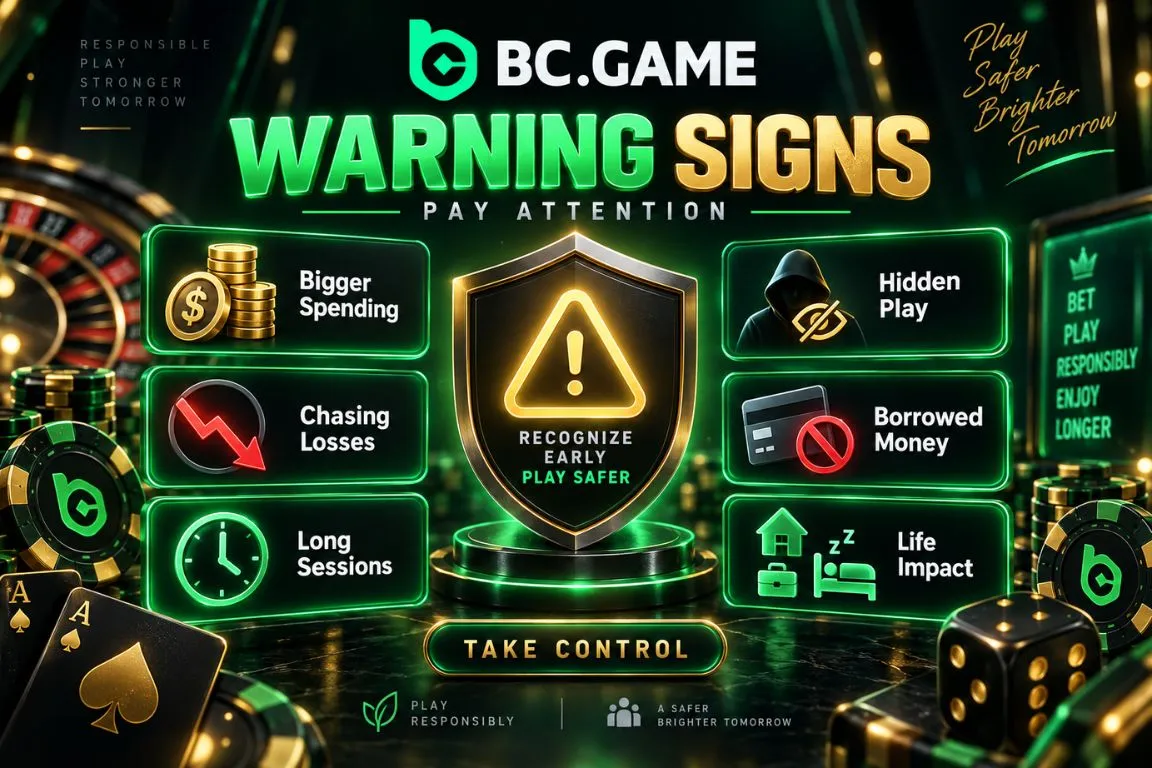
Problem gambling is usually recognised through behaviour rather than one particular amount of money lost.
Warning signs can include:
- Spending increases beyond the amount originally planned.
- Losses lead to repeated attempts to win the money back.
- Gambling sessions regularly last much longer than intended.
- Gambling activity is hidden from family or close friends.
- Borrowed money or credit is used to continue betting.
- Work, relationships, sleep, bills, or other responsibilities begin to suffer.
Several signs appearing together deserve attention even when the person still feels capable of stopping later.
Winning does not cancel these warning signs. Someone can still have a harmful gambling pattern while occasionally withdrawing a profit.
When Should You Take a Break?
A break is appropriate as soon as gambling stops feeling like a voluntary leisure activity.
Stop playing if you notice that you are depositing money you had reserved for something else, repeatedly breaking your own budget, gambling while angry or distressed, or staying online mainly to recover a loss.
A longer break is especially sensible when:
- Previous spending limits are repeatedly ignored.
- Gambling continues after money for the session is gone.
- Arguments about betting become common.
- Work or sleep is being disrupted.
- Borrowing begins to finance gambling.
- Attempts to stop for a few days repeatedly fail.
At that point, relying only on willpower may not be enough. A formal account restriction and outside support provide stronger barriers.
Self-Exclusion from BC Game
Self-exclusion is designed for users who want to stop access to gambling rather than simply reduce the number of sessions. The current Responsible Gambling information states that the restriction lasts for a minimum of six months and that promotional material is not sent during the exclusion.
A request can be made through Customer Support. The process should be treated as a serious account restriction rather than an ordinary account setting that can be switched on and off casually.
A practical route is:
- Stop placing new bets and deposits.
- Open the official Live Support option.
- State clearly that you want responsible-gambling self-exclusion.
- Follow the account confirmation steps provided by support.
- Allow the restriction to take effect.
- Avoid attempting to regain access through another account.
Users are also encouraged to request similar restrictions at other gambling sites where they hold accounts.
Protection of Minors
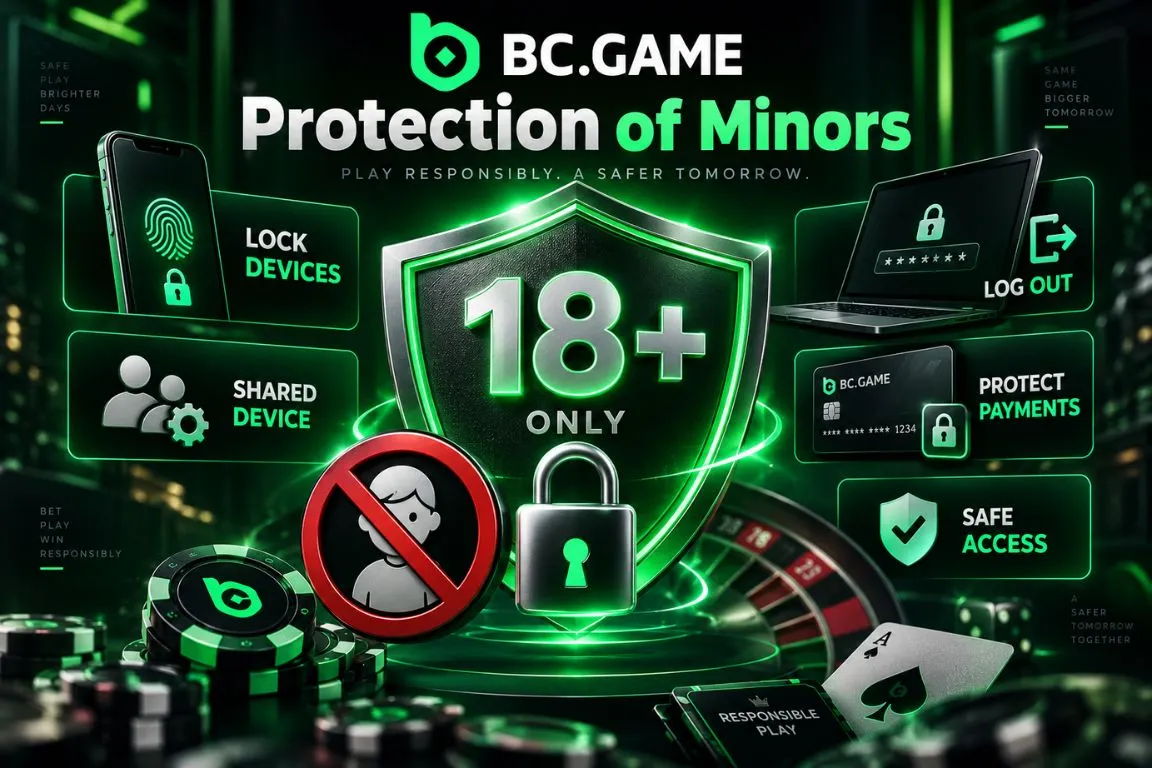
BC Game requires users to be at least 18 years old and also requires them to meet any higher legal gambling age applicable in their jurisdiction.
Adults sharing a home or device with children should prevent access to both the gambling account and associated payment information.
Useful precautions include:
- Protect computers, phones, and tablets with passwords or biometrics.
- Do not leave a logged-in gambling account unattended.
- Keep cards and payment details inaccessible to minors.
- Avoid storing account passwords on shared devices.
- Use parental or content-filtering controls where appropriate.
- Log out fully before another person uses the device.
Age protection is not limited to the registration form. It also depends on how adults manage devices and payment access after signing in.
Getting Help for Gambling Problems
Self-exclusion can block account access, but it does not address every reason someone finds it difficult to stop gambling.
Professional or peer support can help with urges, debt-related stress, secrecy, relationship problems, and the habits surrounding repeated gambling. Users do not need to wait until the situation becomes severe before asking for help.
A useful first step is to tell someone trustworthy what is happening. The next step may be counselling, peer support, an online adviser, or a structured recovery program.
If gambling has created debt, the immediate priority should be stopping further losses rather than trying to win enough money to repay what is owed.
Support can also be useful for partners and family members affected by another person’s gambling.
Last used 6 minutes ago
Gambling Support Organisations
Gambling Therapy provides free global support for people affected by gambling. Its service includes text-based live support with experienced advisers, online resources, forums, and multilingual assistance using translation where necessary. The service is intended for people concerned about their own gambling as well as those worried about someone else.
Gamblers Anonymous provides peer-based recovery meetings, including virtual meeting options. Its international service can help people find suitable meetings, and recent international activity has included assistance for a person in Nigeria through an Africa-focused support group.
These organisations operate independently from BC Game. They are relevant when the issue is gambling behaviour itself rather than an account setting or technical problem.
Where to Get Gambling Support
| Organisation | Type of Support | How to Get Help |
| Gambling Therapy | Global professional and peer support for gambling harm | Use its official text-based live support, online forums, or self-help resources |
| Gamblers Anonymous | Peer support and recovery meetings | Use the official virtual meeting service or contact its international service to find available support |
Gambling Therapy explicitly describes its service as global and provides live text support in multiple languages. Gamblers Anonymous offers virtual meetings for people seeking peer-based recovery.
If one form of support does not feel suitable, trying another is reasonable. Some people prefer confidential one-to-one text support, while others respond better to regular group meetings.
How to Contact BC Game for Help
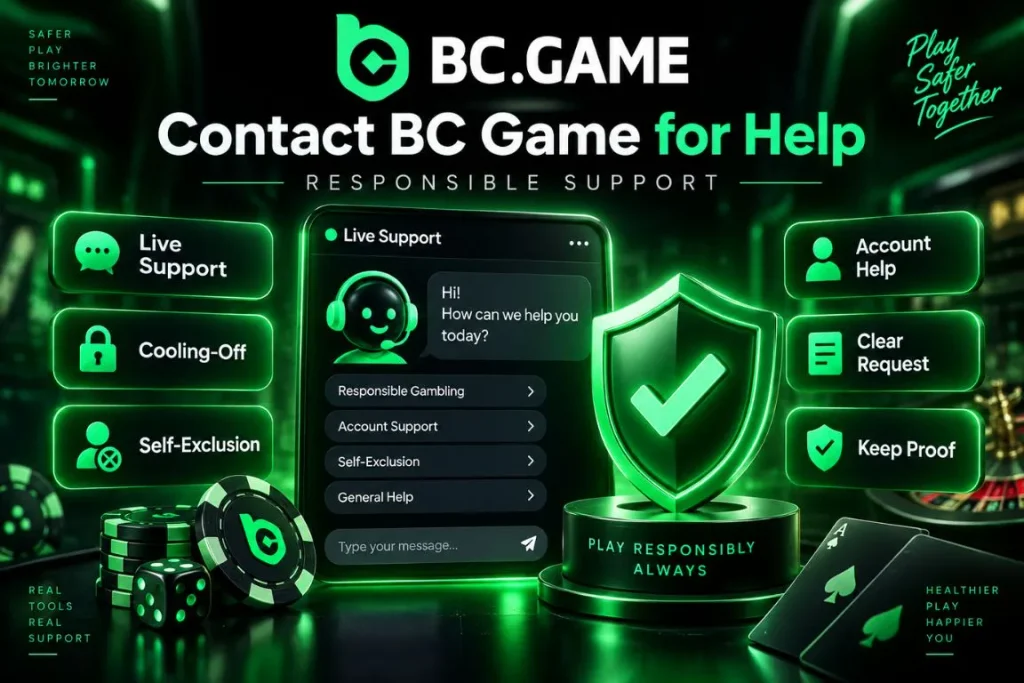
Responsible-gambling requests can be made through the official Customer Support or Live Support function. Support can assist with a cooling-off period, self-exclusion, and questions about restrictions already applied to the account.
When contacting support:
- Sign in if account access is still available.
- Open Live Support.
- State that the request concerns responsible gambling.
- Specify whether you need cooling-off or self-exclusion.
- Complete any account confirmation requested.
- Keep confirmation of the restriction for your records.
There is no need to explain or justify losses in detail before requesting protection. The important point is to communicate clearly that access needs to be restricted.
If gambling is causing wider financial or emotional problems, account support should be combined with independent gambling-harm assistance.