

What Information Does BC Game Collect?
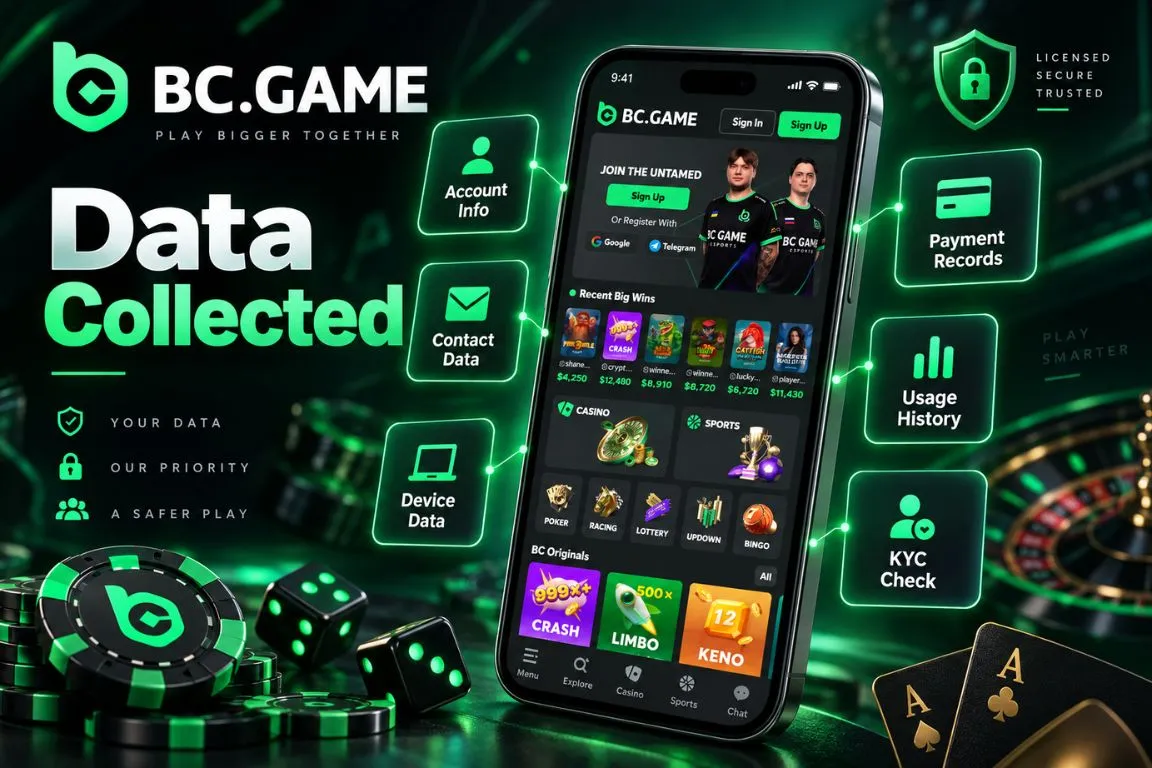
BC Game processes several categories of information connected with account use. These include account details, contact information, device data, financial records, location information, usage history, fraud-prevention data, marketing preferences, and identification information when KYC is required.
The policy separates ordinary account information from more sensitive categories. It states that sensitive personal data is not normally collected or processed unless this is legally required and the necessary consent applies.
The main categories include:
- Account information can include user ID, email, username, age, and account status.
- Contact information can include full name, phone number, email, and physical address.
- Financial information can include payment methods and deposit or withdrawal records.
- Device information can include IP address, device ID, operating system, and browser type.
- Usage information can include browsing activity and game history.
- Verification information can include government-issued identification where KYC is required.
Information Provided by Users
Some personal data enters the account because the user provides it directly. Registration can involve account and contact details, while payment activity creates financial records connected with deposits, withdrawals, and other transactions.
Additional information may be supplied during identity verification, but government-issued identification is collected where KYC is required rather than described as mandatory for every user from the moment of registration.
Support requests can also contain personal information voluntarily provided to explain an account, payment, or security issue.
Typical user-provided categories include:
- Registration details used to create and maintain the account.
- Contact details used for communication and account functions.
- Payment information generated through financial activity.
- Identity information provided when verification is required.
- Support information supplied when asking for assistance.
- Marketing preferences selected for promotional communications.
Users should provide accurate information because inconsistencies can affect account administration or security checks.

Last used 6 minutes ago
Information Collected Automatically
Technical and behavioural data can be generated while the service is being used. The Privacy Policy includes IP address, device ID, operating system, browser type, platform interactions, browsing activity, and game history among the information it may process.
Fraud-prevention information can also be created from security monitoring. This category includes device trust assessments, suspicious-activity monitoring, and transaction analysis.
Approximate or precise location information is another category identified by the policy. Its use can support account security, service availability, and compliance-related controls where applicable.
Automatic data can therefore include:
- Device identifiers associated with the hardware or browser session.
- Network information such as the IP address.
- Browser and operating system information.
- Activity data generated while using the platform.
- Location information where collected for relevant functions.
- Security signals connected with fraud or transaction monitoring.
Personal Data and Its Purpose
Different data categories serve different operational purposes. The table below summarizes the main connections between information collected and the reason it may be processed.
| Data Type | Examples | Purpose |
| Account data | User ID, username, age, account status | Create, maintain, and manage the account |
| Contact data | Name, email, phone number, address | Communication, account administration, support |
| Device data | IP address, device ID, browser, operating system | Security, service operation, fraud prevention |
| Financial data | Payment method, deposits, withdrawals, transaction history | Process payments and maintain transaction records |
| Location data | Approximate or precise location | Security, service availability, compliance functions |
| Verification data | Government-issued ID where required | Identity checks and applicable KYC procedures |
| Usage data | Game history, browsing and platform activity | Service improvement, account functions, personalization |
| Security data | Suspicious activity and transaction analysis | Detect fraud and protect accounts |
| Marketing data | Communication preferences | Manage promotional communication and preferences |
The legal basis can differ according to the processing activity. The policy identifies contractual necessity, legitimate interests, user consent where required, and compliance with legal obligations among the bases used for processing.
How BC Game Uses Personal Information
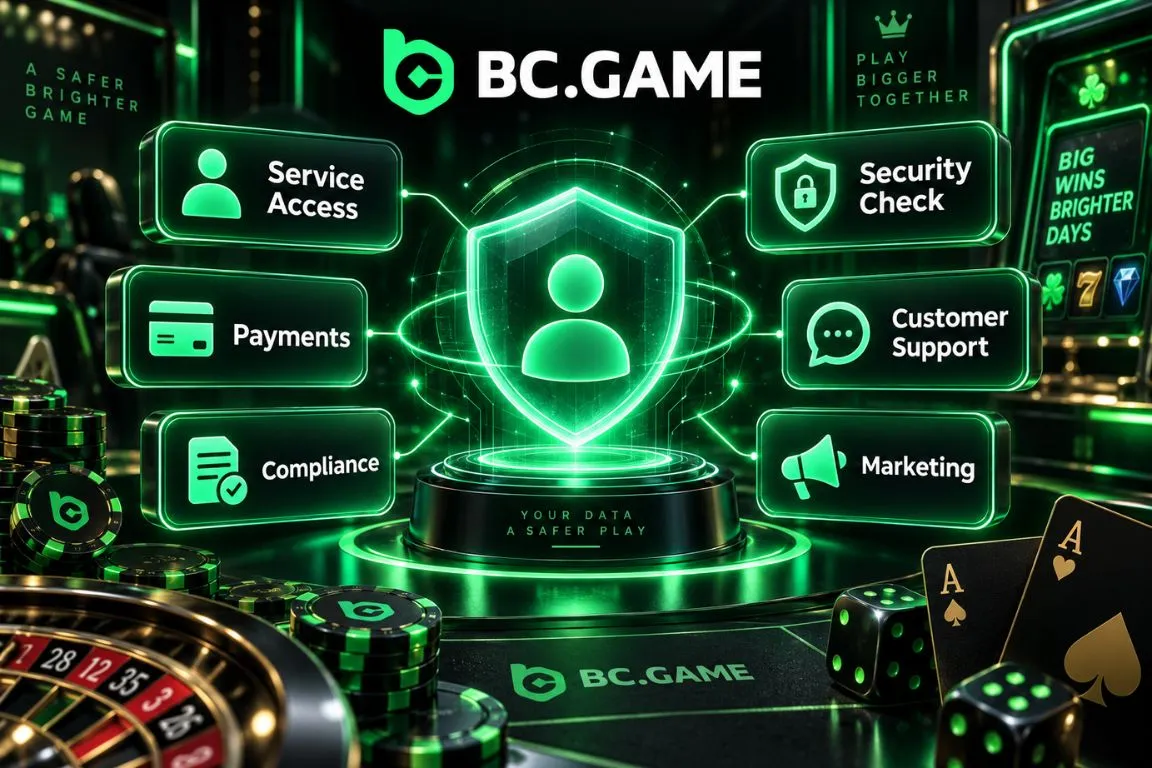
Personal data supports the practical operation of a casino and sportsbook account. Account information is used to provide and maintain services, while identity and security data can help confirm that the account is being used legitimately.
Financial information is required to process transactions and maintain payment records. Technical and behavioural information can support service improvement, fraud detection, security, and enforcement of account rules.
The policy also permits data use for customer support, marketing, promotional activity, recommendations, and applications connected with VIP programs or rewards. Regulatory, anti-money-laundering, and tax obligations may require separate processing where applicable.
Main purposes include:
- Service operation covers account access and platform functions.
- Security processing helps verify identity and detect suspicious activity.
- Transaction processing supports deposits, withdrawals, and payment records.
- Communication supports account notices and customer assistance.
- Compliance processing addresses applicable regulatory obligations.
- Marketing processing supports promotions where the relevant permissions apply.
Users can opt out of direct marketing through the available preference controls.
Cookies and Tracking Technologies
Cookies are small files used during website visits to support functions such as maintaining sessions, remembering settings, understanding how the site is used, and adapting content.
BC Game uses session and persistent cookies. Some are required for normal website operation, while others can support functionality, technical measurement, or marketing-related purposes. Cookie settings can be managed through browser controls, and available privacy settings can also be used to adjust preferences.
Users should understand that disabling certain cookies can affect how parts of the platform work. Login persistence, saved preferences, and other browser-based functions may rely on cookie data.
Cookie controls generally allow a user to:
- Accept cookies needed for normal platform use.
- Restrict optional cookie categories where controls are available.
- Change browser privacy settings.
- Delete stored cookies from the device.
- Review privacy preferences again later.
- Adjust marketing-related preferences separately.
Removing stored cookies may also require the user to sign in again.
Sharing Data with Third Parties
However, personal information is not restricted for use internally in all cases. According to the Privacy Policy, data can be disclosed if another entity is necessary for rendering services, fulfilling security functions, meeting legal obligations, or conducting business transactions.
Such entities may be affiliates, payment processors, cloud infrastructure providers, KYC providers, fraud prevention service providers, cybersecurity providers, and any other government authorities where disclosure is legally required.
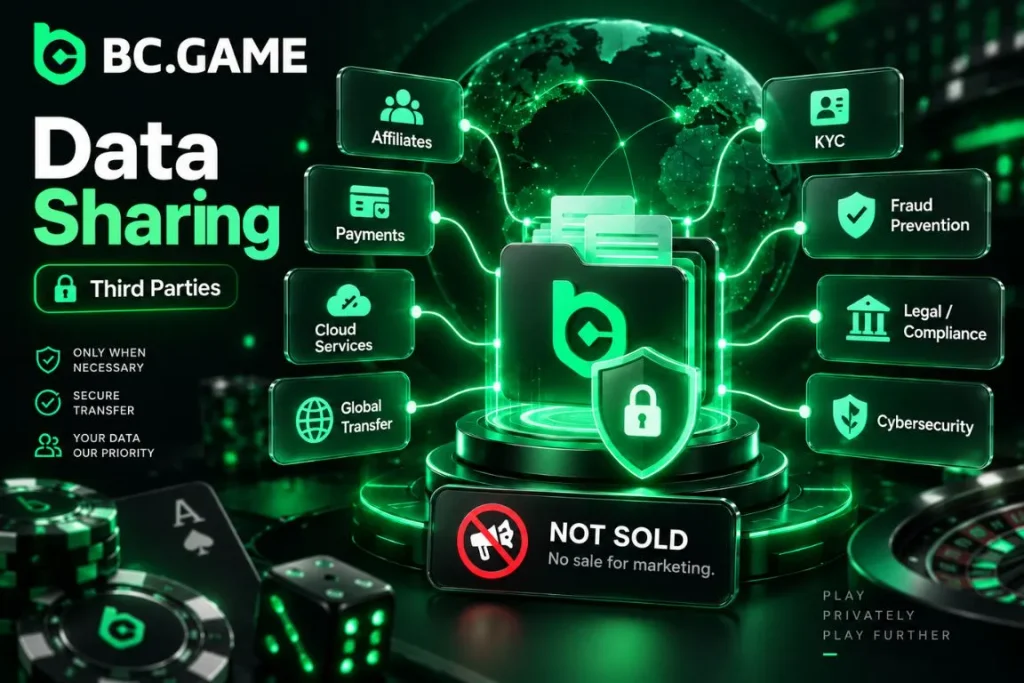
Furthermore, personal information may be disclosed in relation to a merger, acquisition, or any other reorganization of the business.
According to the policy, personal information is neither sold nor rented to third parties for marketing purposes.
It can also happen that international disclosures will be made due to the global nature of the service. In such a case, according to the policy, appropriate measures will be taken whenever it is necessary.
Last used 6 minutes ago
Service Providers
Service providers perform specific operational tasks that cannot always be handled solely inside the platform.
A payment processor, for example, may need transaction information to complete a deposit or withdrawal. A verification provider may receive information needed for an identity check, while infrastructure or security partners may process technical data necessary to keep services running.
The amount of information shared should relate to the purpose for which the provider is involved. This does not mean every outside provider receives a complete account record.
Typical purposes include:
- Payment processing and transaction handling.
- Identity verification when KYC is required.
- Hosting and technical infrastructure.
- Fraud detection and cybersecurity.
- Customer support functions.
- Compliance with lawful regulatory requests.
Users should avoid sending personal data to anyone who contacts them outside normal account or support channels.
Last used 6 minutes ago
How BC Game Protects Your Data
The Privacy Policy describes several safeguards used to protect personal information. These include SSL protection for data in transit, multi-factor authentication, internal access controls, security audits, employee security procedures, and measures for responding to data breaches.
The policy also states that access to sensitive information is limited to authorized personnel and identifies ISO 27001 and SOC 2 among the security frameworks it follows.
Protection is not limited to one technical measure. Account security combines system controls with user-side precautions.
Users can strengthen that protection by:
- Creating a password not reused on another account.
- Activating available multi-factor authentication.
- Protecting the email linked to the profile.
- Checking account messages before following instructions.
- Avoiding unexpected requests for passwords or security codes.
- Signing out after using a shared device.
No security system makes careless disclosure of credentials safe.
Data Storage and Retention
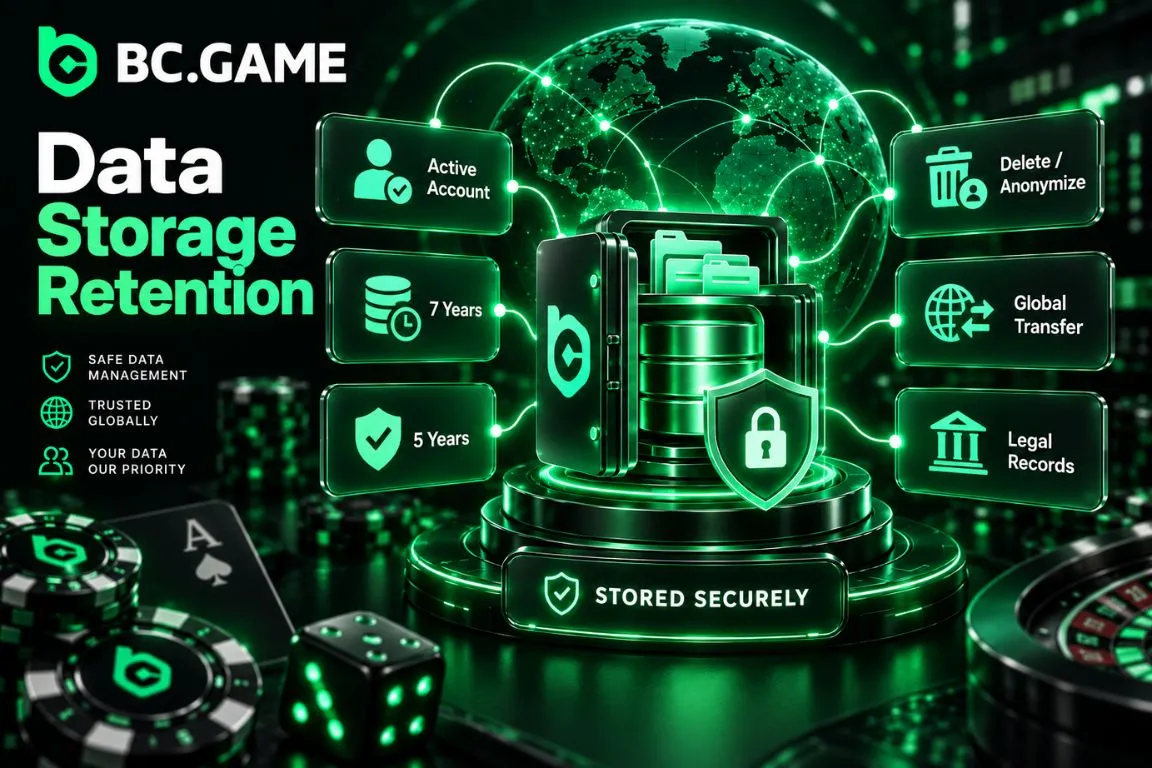
Personal information is retained according to why it was collected and whether legal or operational reasons still require it.
Account data can be retained while the account remains active. Transaction records may be kept for up to seven years for regulatory and tax purposes. Fraud-prevention information may be retained for up to five years, while marketing preferences remain until the user opts out.
Once the applicable retention purpose ends, information can be deleted or anonymized unless further storage is legally required.
This means closing an account or requesting deletion does not necessarily result in every record disappearing immediately. Financial, security, dispute, or regulatory records may still need to be preserved for the applicable retention period.
Personal data can also be transferred outside the user’s country of residence when global service operations require it, subject to the safeguards described in the policy.
Your Privacy Rights
Privacy rights depend on the user’s jurisdiction and the legal basis under which particular information is being processed.
The policy identifies rights that can include access, correction, deletion, restriction of processing, objection to certain processing, data portability, and the ability to lodge a complaint with an appropriate supervisory authority.
The principal rights include:
- Access allows a user to request a copy of applicable personal data.
- Rectification allows inaccurate or incomplete information to be corrected.
- Erasure allows deletion to be requested where legally applicable.
- Restriction can limit certain processing in qualifying circumstances.
- Objection can apply to marketing and some other processing activities.
- Portability can provide eligible information in a structured transferable format.
Deletion is not an unconditional right to erase every record. A request can be limited where information must still be retained for a legal or regulatory reason.
How to Submit a Privacy Request
The current Privacy Policy describes the rights available to users but does not publish a separate privacy-request form or dedicated privacy email within the policy text.
A practical request should therefore be submitted through the official BC Game support channel, with the required action clearly identified. For example, the user can state that the request concerns access, correction, restriction, or deletion of personal information.
A clear process is:
- Sign in to the account where possible.
- Open the official customer support channel.
- State which privacy right you want to exercise.
- Identify the account using the information requested for verification.
- Provide only information necessary to process the request.
- Keep the support reference until the request is resolved.
Identity confirmation may be required before personal data is disclosed or changed. This helps prevent another person from using a privacy request to gain access to account information.
Last used 6 minutes ago
Privacy Policy Updates
Privacy rules and platform operations can change, so the policy is not necessarily permanent in its current form.
BC Game states that the Privacy Policy may be updated periodically. The latest version is made available through the Privacy Policy section of the platform. Significant changes may also be communicated by email or through an in-platform notification.
Users should review the current version when a meaningful change affects account use, payments, data sharing, or privacy rights.
It is particularly sensible to check the policy again after:
- A major account or verification change.
- Introduction of a new payment function.
- Addition of new privacy controls.
- Receipt of a policy-change notification.
- A request concerning stored personal information.
- Return to the account after a long period of inactivity.
The version currently published should take priority over older summaries.
Contact BC Game About Privacy
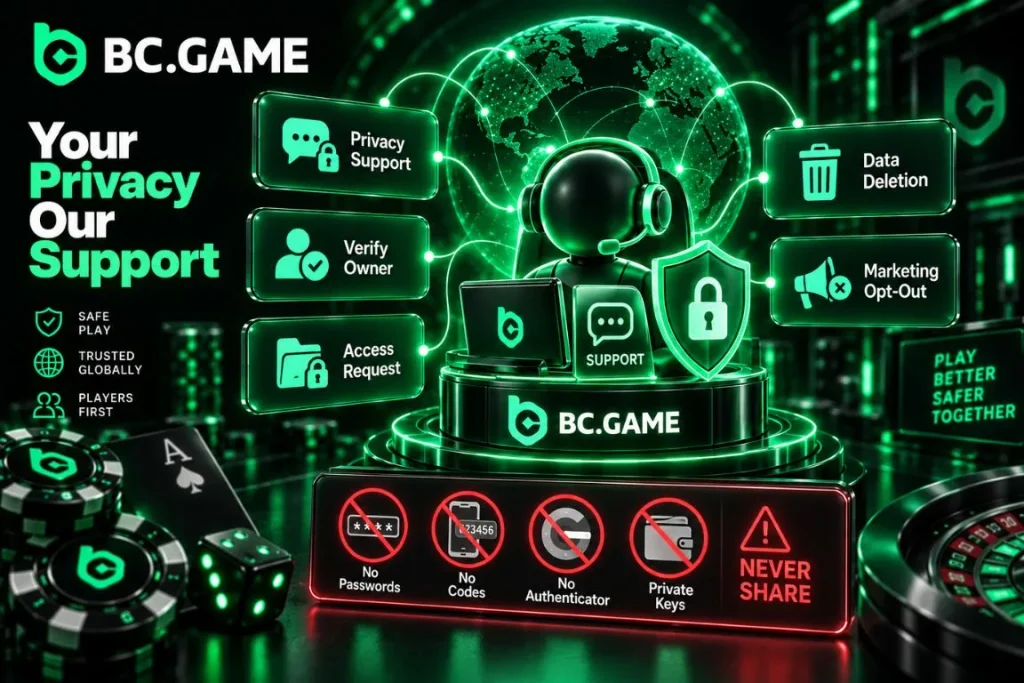
The current Privacy Policy does not list a separate privacy-specific email address in its main text. Privacy matters should therefore be raised through the official BC Game customer support channel available from the platform.
A request should clearly explain whether it concerns access, correction, deletion, data sharing, marketing preferences, or another privacy issue. Avoid sending more personal information than necessary before support explains what is required.
For account-specific requests, some form of ownership verification may be necessary before information can be disclosed or changed.
Users should never provide passwords, one-time login codes, authenticator codes, wallet seed phrases, or private keys as part of a privacy inquiry. Normal identity verification does not require handing over credentials that would allow another person to take control of the account.